Museum of Sex
Role
UIUX Designer
Client
School Study
Project type
Museum experience design
Project overview
MOS explores how museums can extend sexual education beyond exhibitions through everyday, accessible touchpoints.
The project reimagines the museum as an educational ecosystem rather than a single-visit experience.
PROBLEM
Sex education is often fragmented, avoided, or inaccessible—especially for young audiences.
While museums provide rich cultural and educational context, learning frequently ends when visitors leave the exhibition space.
For institutions such as the Museum of Sex, the challenge is not only to present content but also to sustain education in ways that feel safe, private, and approachable.
EXHIBITION CONTEXT
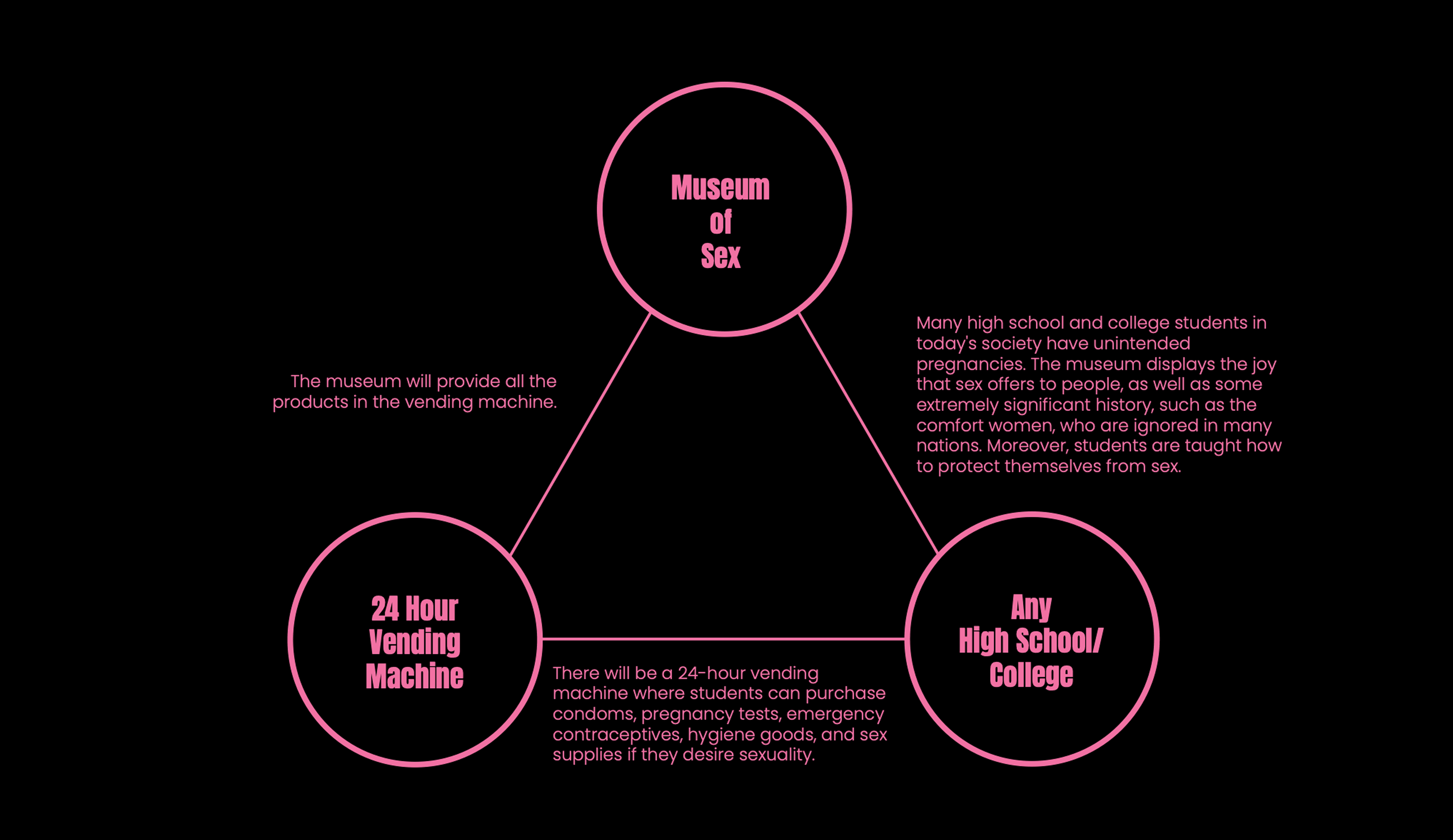
To ground the system in real experience, the project follows a user scenario centered on Cara, a high school student.
Her journey reflects common challenges faced by young visitors: curiosity mixed with discomfort, limited access to trustworthy information, and the need for privacy when learning about sensitive topics.

Why This Matters
This project demonstrates an approach to product and experience design that prioritizes systems over screens.
It emphasizes how thoughtful integration of space, content, and interaction can expand the role of cultural institutions in everyday learning.
SOLUTION CONCEPT
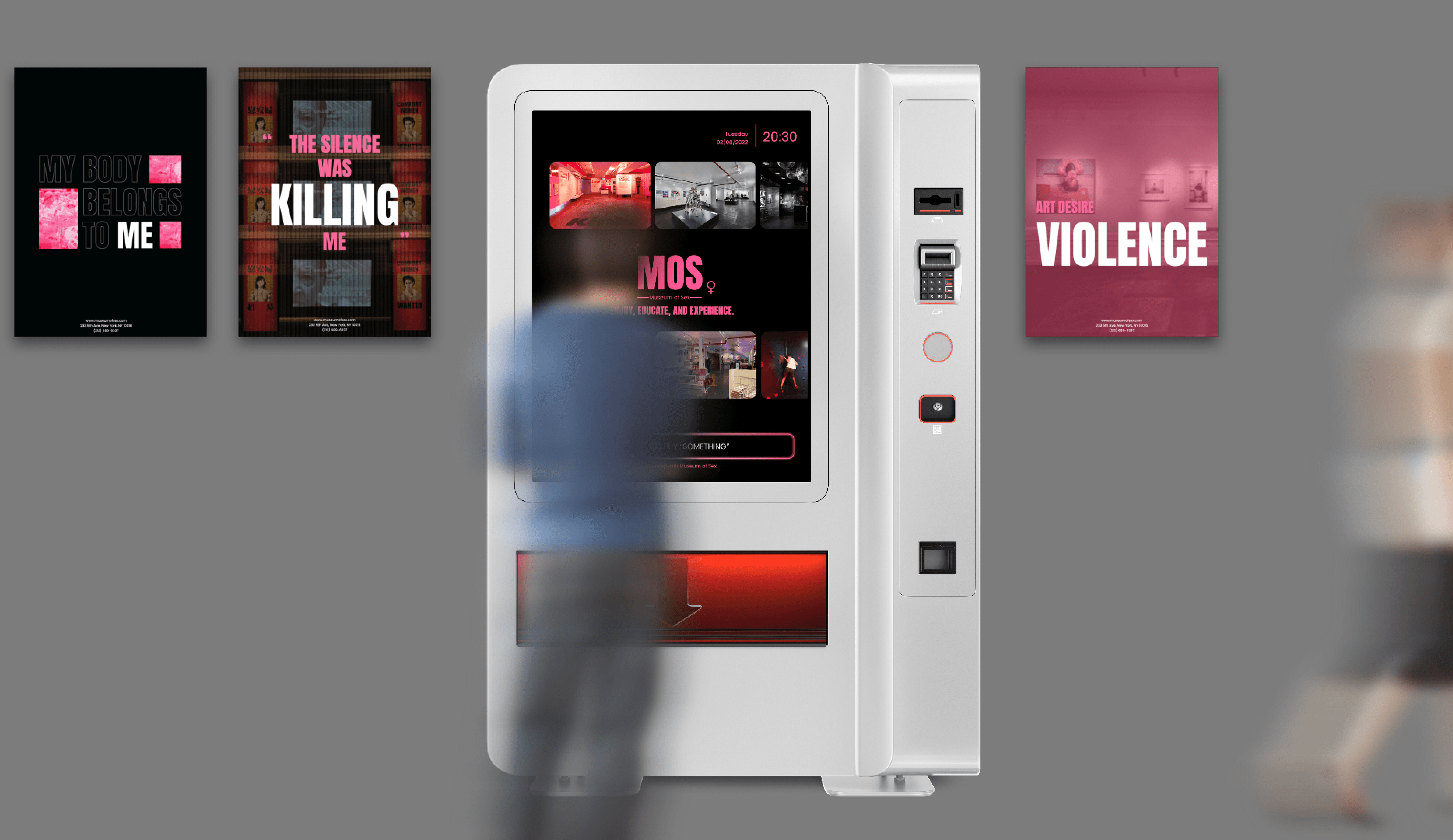
The vending machine acts as an extension of the museum’s educational mission.
It offers a familiar, discreet interaction model that allows visitors to access learning materials privately, without social pressure or surveillance.
By embedding education into an everyday object, the museum experience continues beyond the exhibition floor.

INTERACTION FLOW
The interaction flow is intentionally simple.
Users browse educational topics, make selections, and receive materials through a familiar transaction model.
This structure reduces cognitive and emotional barriers, enabling learning at the user’s own pace.


